
Choosing the right dental treatment can feel overwhelming, especially when multiple options promise beautiful, long-lasting results. Two of the most common restorative and cosmetic solutions in modern dentistry are crowns and veneers. While both treatments can dramatically improve the appearance of your smile, they serve different purposes and are recommended in different clinical situations. Understanding how crowns and veneers work, what problems they address, and how they differ can help patients make confident, informed decisions about their dental care.
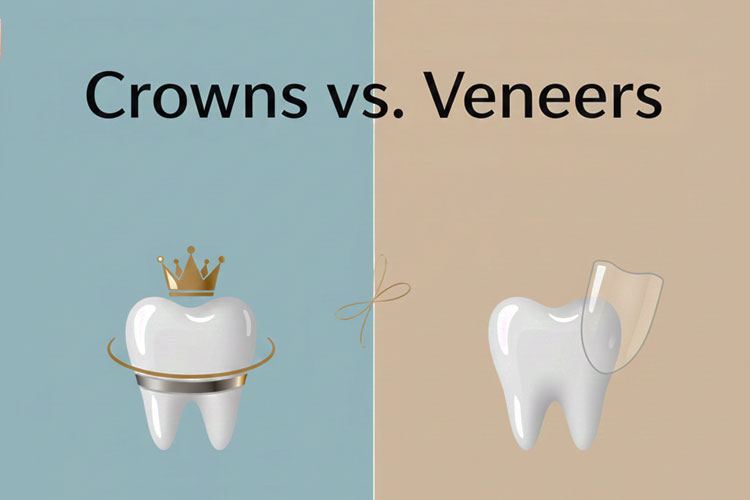
Dental crowns are primarily a restorative treatment designed to protect and strengthen teeth that have been significantly damaged. A crown covers the entire visible surface of a tooth, restoring its shape, size, strength, and function. Crowns are often recommended for teeth that are cracked, heavily decayed, weakened after root canal treatment, or worn down over time. Patients who grind their teeth and have lost critical tooth structure can also have their teeth restored to health and function using ceramic crowns. Ceramic crowns are popular because they closely mimic the color and translucency of natural teeth while providing excellent durability. By fully encasing the tooth, a crown reinforces its structure and allows patients to bite and chew comfortably without fear of further damage.
Veneers, on the other hand, are primarily a cosmetic solution. They are thin shells, usually made of ceramic, that are bonded to the front surface of the teeth. Veneers are ideal for improving the appearance of teeth that are chipped, stained, slightly misaligned, unevenly spaced, or irregular in shape. Unlike crowns, veneers do not cover the entire tooth and typically require less removal of natural tooth structure. Because veneers focus on aesthetics rather than structural repair, they are best suited for teeth that are otherwise healthy but would benefit from visual enhancement.
One of the most important differences between crowns and veneers lies in when each treatment is appropriate. If a tooth is structurally compromised—due to decay, fracture, or extensive wear—a crown is usually the better option because it provides full protection and long-term stability. Veneers are not designed to withstand heavy biting forces on damaged teeth. However, when the tooth is healthy but the patient is unhappy with its appearance, veneers can offer a conservative and highly effective solution. A thorough dental examination, including X-rays and clinical evaluation, is essential to determine which treatment best meets the patient’s functional and aesthetic needs. Drs. Babak and Jenni Joobbani both have advanced training in using the best latest ceramic materials to fully restore a patient’s teeth/mouth back to beauty, form, and proper function.
Both crowns and veneers offer excellent longevity when properly cared for, especially when made from high-quality ceramic materials. Good oral hygiene, regular dental checkups, and avoiding habits such as teeth grinding or biting hard objects can significantly extend the lifespan of both restorations. Ultimately, the choice between crowns and veneers is not about which treatment is “better,” but which is right for your individual smile. By consulting with our dentists and discussing your goals, concerns, and oral health condition, you can choose a treatment that restores confidence, comfort, and a natural-looking smile for years to come.
Keywords: ceramic crowns, dental veneers, crowns vs veneers, cosmetic dentistry, restorative dentistry, smile restoration, tooth damage, aesthetic dentistry, dental treatments, oral health