
Many people grind or clench their teeth while they sleep without ever realizing it. Because it happens unconsciously, the symptoms often show up during the day in subtle ways—ways most people don’t immediately associate with nighttime tooth grinding, also known as bruxism. Catching the signs early is important, because untreated grinding can lead to long-term damage to the teeth, jaw joints, and even overall quality of sleep. Here are three of the most common indicators that you may be grinding your teeth at night.
Studies show that 10–20% of adults grind their teeth regularly, with 8–15% doing so during sleep. Daytime clenching is even more widespread, affecting up to 30% of people, often linked to stress and tension.
1. Morning Jaw Soreness or Headaches
One of the first red flags is waking up with tightness in the jaw, soreness in the cheeks, or a dull headache around the temples. These symptoms occur because grinding and clenching put significant pressure on the jaw muscles while you sleep—sometimes with a force up to ten times stronger than normal chewing. Over time, this strain can contribute not only to discomfort, but also to conditions like temporomandibular joint (TMJ) issues. If you consistently notice tightness when you wake up, it may be worth investigating whether bruxism is the cause.
2. Worn-Down or Sensitive Teeth
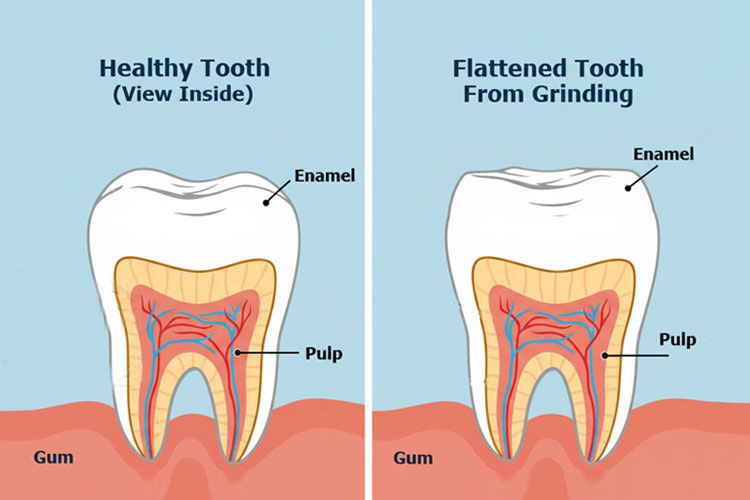
Another common sign of nighttime grinding is increased tooth sensitivity or visible wear on the edges of the teeth. Grinding can slowly flatten tooth surfaces, chip edges, or create tiny fractures that make your teeth more sensitive to hot, cold, or sweet foods. Many patients are surprised to learn how much wear occurs while they sleep. If your dentist notices enamel erosion, unusual patterns of wear, or changes in your bite, they may suggest that nighttime grinding is the culprit.
3. Disturbed Sleep or Audible Grinding Sounds
Sometimes, the evidence comes from a sleeping partner who hears the grinding noises during the night. The sound can be surprisingly loud, and although you may not wake from it, your partner might. Even if no one has mentioned the noise, grinding can still disrupt your own sleep, leading to restless nights or daytime fatigue without a clear explanation. Since bruxism is often linked with stress, anxiety, or even sleep-disordered breathing, these nighttime disturbances can be an important clue to what’s happening.
Recognizing these signs early can help protect your teeth and improve your overall comfort. If you suspect you may be grinding your teeth, a dental consultation is the best next step. Your dentist can assess the wear patterns on your teeth, evaluate your jaw function, and recommend solutions such as a custom night guard to protect your smile. With the right support, you can reduce discomfort, improve sleep quality, and prevent long-term damage—keeping your teeth healthy and strong for years to come.
Keywords: teeth grinding, bruxism, night guard, jaw pain, morning headaches, worn enamel, TMJ discomfort, tooth sensitivity, dental health, sleep-related grinding